.png)
How a Cooking Class in Guatemala Changed How We Travel
- Thomas Connolly
- 3 days ago
- 7 min read

It was a bright March morning in 2025. My family and I woke early and took a bumpy tuk-tuk ride down to a busy boat dock on the shore of Lake Atitlán, in Panajachel, Guatemala. We stepped aboard a water taxi and skipped our way from village to village around the edge of the lake, finally arriving at our destination: San Pedro La Laguna. We disembarked and walked the stone streets, colorful flags flying overhead, to the center of town, where we joined a small group of fellow tourists, awkwardly mingling while we waited for our guide. We were soon met by Anita, our instructor for the day and the owner of Mayan Kitchen Cooking, a small cooking school she operates out of her home in San Pedro. Moments later, we piled into the back of a pickup truck and wound through steep, narrow streets, the wind whipping our hair. We were bound for our first stop: the local market.

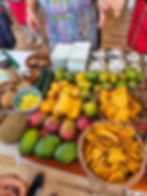
Anita guided us through the market from stall to stall, introducing us to the growers and showing us varieties of fruits and vegetables that we'd never seen before. Surrounded by a rainbow of colors, we sniffed spices, squeezed avocados, and tasted roasted pepitas. Walking the aisles, surrounded by shoppers buying their daily meal and
vendors calling out to regulars, was a stark contrast to how we usually buy food in the U.S - from sterile stacks in a fluorescent-lit grocery store, far removed from its origin.
Back in Anita’s kitchen, she walked us through the fruits and vegetables that grow in her region. We tasted nine varieties of avocado and nearly as many kinds of mango, each with its own flavor and texture. As
we prepared our meal of traditional tamales, Anita taught us about the importance of corn to the Mayan culture. The Mayan people believe the gods crafted them from corn, demonstrating corn's deep significance in both their food and their daily life. In fact, each color of corn - black, white, and yellow - carries its own distinct meaning. As such, we learned that the tamale is a sacred food to the Mayan people, and every ingredient,
every fold, carries meaning.
We left Anita and her cooking class feeling connected to a place in a way we never had before. We weren't simply tourists eating a meal or tasting a dish on a food tour (which we love, by the way). We had spent time with farmers who traveled hours that morning to bring their crops to market. We understood the complexity of flavor in each ingredient and what each dish meant to the Maya. These things would leave a lasting impression on my family and me. But how did we get here? And why did this experience matter so much to me?

Rewind a few decades to small-town Tennessee. I grew up in a relatively rural area near the Smoky Mountains. Stunning scenery - a place people visit from all over the world - but decidedly not a place you’d call “diverse” by any stretch. We were a working-class family without the means for true “vacations.” Long weekends and Christmas vacations consisted of visits to out-of-town family in West Virginia and Nebraska. While these trips created wonderful memories that I cherish, they didn’t exactly provide an opportunity to experience different cultures and cuisines. By the time I left for college, it’s safe to say the only two types of “ethnic” foods I'd ever tried were Mexican and Chinese.
Upon graduating from college, I moved to Atlanta. I distinctly remember my first visit to a Thai restaurant with my new coworkers at my first “big girl” job. My eyes glazed over as I scanned the menu. I was overwhelmed and a bit embarrassed, because everything I saw was unfamiliar. I tried to sound confident as I repeated my neighbor's order - Panang curry - hoping I'd like it. That first bite was warm and delicious. At that moment, I realized what I'd been missing, and there was no going back. I tried my first pho, my first banh mi, and my first saag paneer. I began wandering the aisles of the Buford Highway Farmer's Market on the weekends. But I wasn't yet brave enough to experiment with the ingredients in my own kitchen. And I certainly wasn't thinking about international travel as a recent college grad.
Fast forward to 2020. Stuck at home, forced to cook all the meals for all the picky kids, I was at my wits’ end with lackluster Pinterest recipes. I put out a call on Facebook for cookbook recommendations, and an obsession was born. I acquired new cookbooks faster than I could cook out of them, reading them cover to cover and marking the pages with sticky notes. They helped me get comfortable tracking down unfamiliar ingredients at local ethnic grocery stores and experimenting with them in the kitchen. They also gave my kids a frame of reference for new dishes - a way to try new foods without (too much) pressure.
As the world began to open up post-COVID, so did our ability to travel. Thomas - my husband - and I had stayed close to home for several years, fostering kids through the Department of Children’s Services, which came with its own set of travel restrictions. And traveling with young ones posed its own set of constraints. But when we finalized the adoption of our two kids in June 2021, we were finally able to hit the road. We spent years developing a love for America’s national parks in our camper, which led to the formation of our first family business, Roamstead, a campground and outdoor resort in the Smoky Mountains. And from there, as our kids got older, we finally began traveling internationally. It became our mission to give our kids the childhood we didn't have ourselves: one shaped by exposure to other people, cultures, and belief systems.
As we boarded the water taxi back to Panajachel, we chattered about the flavors of the avocados, how we could recreate the dip made with roasted pepitas at home, and - most of all - the experience Anita had given us in her kitchen. Not only had we prepared a delicious meal with new friends, but we also came away with so much more. I watched the volcanoes shrink behind us as Thomas and I bounced across the lake, reflecting on the experience. To say that Anita’s cooking class had been transformative sounds hyperbolic, but it’s the truth. Our family starts most visits to new cities with food tours, but this was different - it connected us to the local people and culture in a way that simply tasting a dish or eating a meal cannot. A year later, we are still reflecting on this experience and how it has shaped our travel planning. Instead of just seeing a place, how can we get to know it? Instead of just learning the high points of a city’s history, how can we better understand the people who live there? And how can we bring home what we’ve learned and incorporate it into our day-to-day?
At home, my love for cookbooks has grown. I have a whole new built-in bookshelf in my dining room to house my ever-growing collection, and I host a monthly in-person cookbook book club. I no longer live in Atlanta; now I'm just outside Chattanooga, Tennessee. For a small city, we have an impressive food scene, but it still lacks some diversity. So, what happens when your travel budget is limited, and you don't live in a city with endless food options? You find a way to bring the flavors and the history to your own kitchen through the talented chefs, writers, and home cooks who publish beautiful cookbooks filled with stories of their childhoods and the dishes that define their home and culture. And not just for international destinations - America is full of regional cuisines you can't find outside the places they were born. This is how the idea for The Edible Itinerary was born.
So why this? Why now? The world is loud and divided. The rhetoric around who has value and who deserves safety is heavy, to say the least. Food builds familiarity, familiarity builds empathy, and empathy can seem hard to find these days. Other languages have words for the experience of sharing food. My family and I are studying Spanish, and we recently learned about sobremesa, the time spent sitting around the table after dinner, talking long after the plates are empty. Gathering over food is a universal experience. It's the way.

I hope that The Edible Itinerary can be a community for people who, like Thomas and me, love travel and trying new foods. At its core, it's a monthly cookbook club that Thomas and I will be hosting together - exploring how the table can be a lens into a culture, place, or people. If you join us, each month we'll cook from one deeply regional cookbook, discuss the specific dishes that define the place, get a better understanding of the history behind both the dish and the ingredients, and practice how to bring it to life in our own kitchens. And sometimes, we’ll visit the places themselves, eating the food local chefs are making, watching how a single dish varies from kitchen to kitchen, and turning the whole thing into an “edible itinerary” that’s not just about where to eat, but what to eat. But mostly, The Edible Itinerary is a reminder that every recipe carries a story - and that sitting with those stories is its own kind of travel. Think of it as a monthly passport, one you can use from your own kitchen.
I hope you'll join me by subscribing here for new posts in your inbox and following us on social (handles are in my profile) as we bring our travels home. I’ll be sending out our first month's cookbook selection next week!
This is what travel can be. This is what food does. Food is the way in.